Take Action Now
1-5: What You Can Do
1.
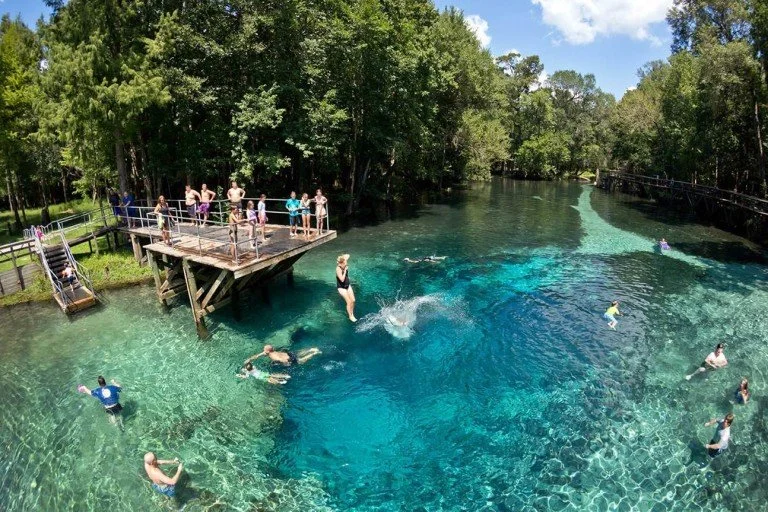
Take time out to visit a spring, and take your loved ones
Let the springs speak to you. Explore, enjoy and learn more about the diverse habitats and ecosystems springs support, including our own.
We protect what we value, and we tend to value that which delights and connects us, sparks our curiosity, broadens our understanding, makes our lives possible and speaks to our hearts. Hire a guide to paddle, dive, bird, bike or hike in the area; enjoy local restaurants and businesses. Every dollar spent supports local and state economies, further confirming the need for springs conservation.
Take a moment to consider all the “ecological services” the springs, wetlands and aquifer provide to all of us 24 hours a day. In addition to maintaining habitats for diverse species of plants and animals (including ourselves), natural wetlands are the most efficient and cost effective systems for cleaning, storing and recharging fresh water. Unlike many places in the world, we really do live in an aqueous paradise of accessible and affordable drinking water, yet that supply is finite and threatened.
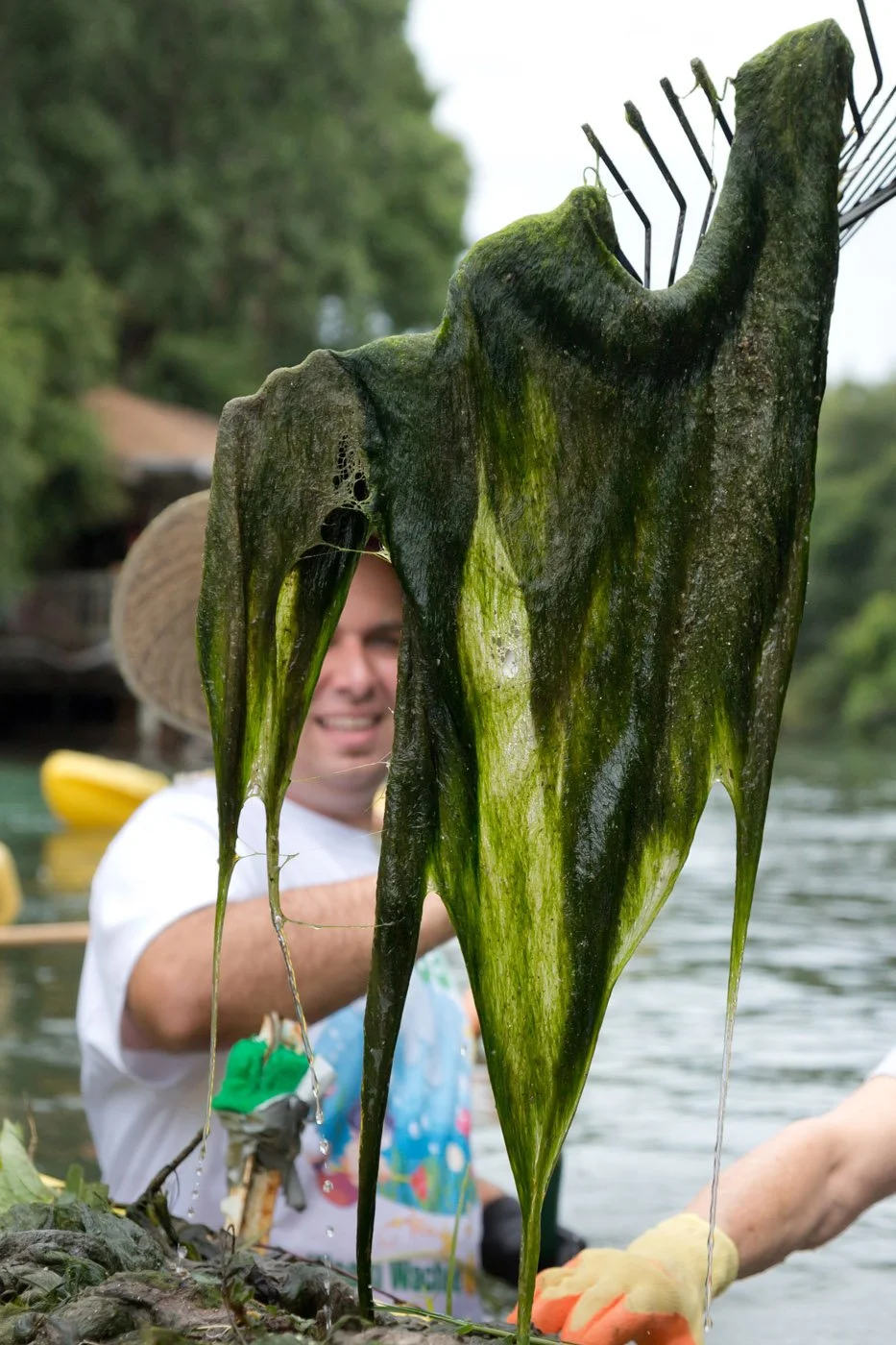
Citizen led clean up on Weeki Wachee Spring run Photo by John Moran
2.
Join or Support a Springs Advocacy, Education and/or Research Group
Volunteer or donate to non-profit organizations supporting springs protection and restoration. The work these organizations do in research, outreach, conservation and education is critical to the survival of our springs.
Ichetucknee, Rainbow, Silver Glen, Silver Springs, Volusia Blue, Wekiva and springs along the Santa Fe and Suwannee rivers all have active advocacy groups.
Become a member and/or donate to the Howard T. Odum Florida Springs Institute, the Alachua Conservation Trust, the Florida Conservation Coalition, the Water Action Team, the Springs Eternal Project and other key groups.
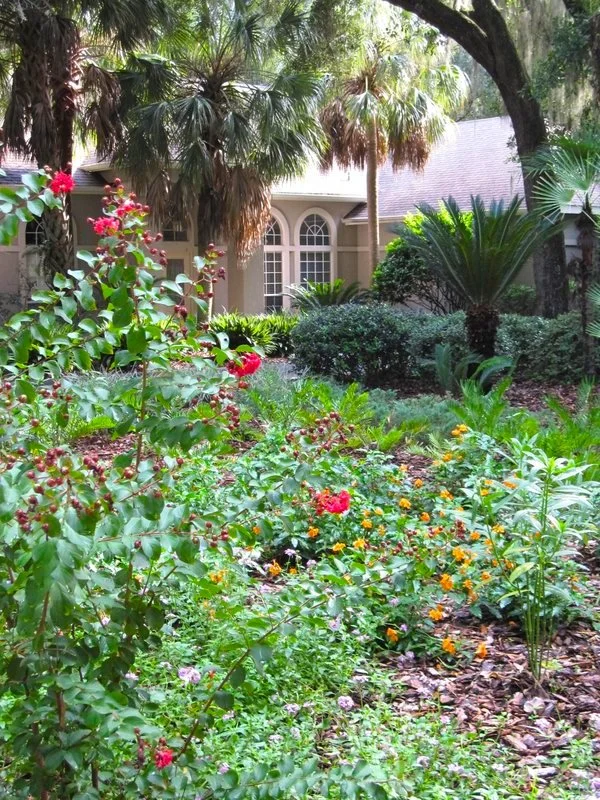
A water-thrifty native garden has replaced a thirsty lawn.
3.
Conserve Water—Use less so we all have more
Conserve water use at home. Recycle rainwater with cisterns or gray water systems, replace your lawn with native vegetation that requires little or no watering and no fertilizer. Install a water meter if you don’t have one already. A list of easy-to-follow guidelines can be in the Alachua County DEP handout.
Use energy-saving appliances, turn off your lights, set your thermostat higher in the summer and lower in the winter. It takes a lot of water to generate electricity. Remember, when you flip the switch, you turn on the water at the power plant. With conservation, your bills will decrease and the amount of water available to our springs can increase.
If you’re a farmer, switch from center pivot systems to micro-irrigation techniques, move water-intensive crops out of springsheds, install water meters and monitor them regularly.[1]
If you’re a homebuilder, feature energy efficient materials and products, water-saving fixtures, and water re-use systems.[2]
If you’re an engineer or inventor, develop new ways for people and businesses to save water. [3]
Investigate how much water it takes to make the products and foods you consume, and adjust your habits wherever possible. Start by making choices that are easy. National Geographic, The Hidden Water We Use: http://environment.nationalgeographic.com/environment/freshwater/embedded-water/
For real-time water data: (stream stage and stream flow, water quality, and groundwater levels), visit the USGS website.
4.
Engage in and Support Non-polluting Practices and Products
Buy local, support farmers who don’t use synthetic fertilizers and pesticides. Produce and food products that come from the springs country of Florida are often grown with fertilizers and pesticides that infiltrate the groundwater, negatively affecting the aquifer and springs ecosystems. Something as simple as supporting local farmers who refuse to use synthetic fertilizers and pesticides can influence agricultural practices to shift to more ecologically sustainable methods.
Grow Native! And Let’s Get Real about Being Florida Friendly. Find organic alternatives to inorganic fertilizers for your lawn and plants—and encourage your neighbors/community/town/city/state to do the same. Nitrogen and phosphorous are primary contributors to the overload of algae in our springs and in most of Florida’s waters (i.e. the Indian River Lagoon, Tampa Bay, etc.). An even better solution: stop fertilizing altogether. Swap your lawn for hardy, water-thrifty native plants.
Worried about your HOA? In 2009, the state Legislature passed the Water Rights Bill, which forbids local governments, including HOAs, from prohibiting the use of native and other Florida-friendly plants because they require less watering and little to no commercial fertilizers, which pollute waterways.
Consult or join your local Native Plant Society. In the meantime, here are two guidebooks: A Gardener’s Guide to Florida’s Native Plants by Rufino Osorio and Florida’s Best Native Landscape Plants by Gil Nelson.
Use biodegradable, non-toxic products and don’t flush medications or other chemicals down the drain. Dispose of oil, antifreeze and other products properly. If you don’t want to drink it, dispose of it properly. Each county has guidelines for household, hazardous, and business waste disposal. Here’s a link to household waste disposal on the Alachua County Department of Environmental Protection’s website.
If you have a septic system, have it inspected regularly to make sure it’s not leaking into our groundwater. Consider upgrading to a system that reduces pollution levels even further.
Report algae outbreaks to:
The Sierra Club’s Slime Crime campaign
The Florida Department of Environmental Protection Water Resource Management.
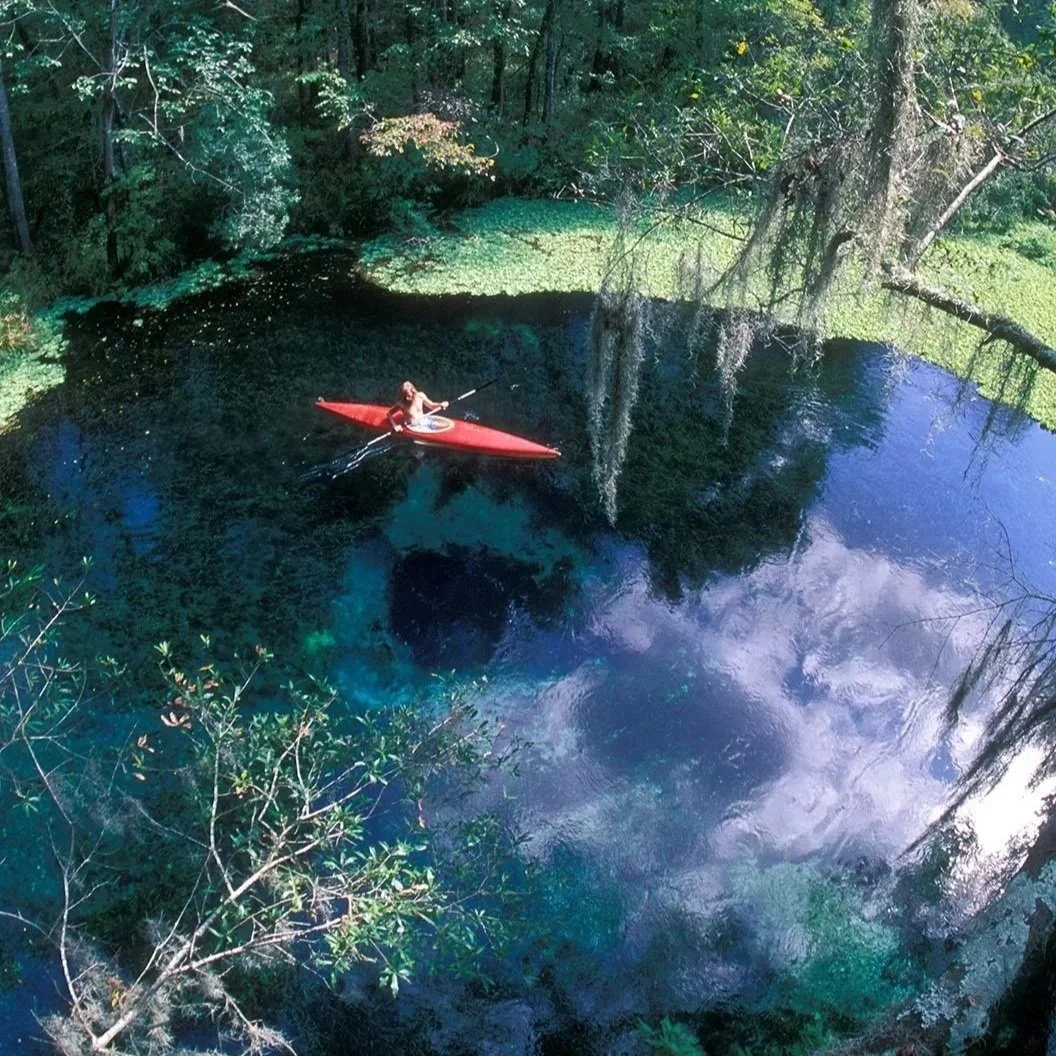
Ichetucknee Blue Hole Photo by John Moran
5.
Support Land Conservation
Even if we live far from a spring, the daily choices we make impact the springs and, ultimately, the quality and quality of water for everyone.
A springshed is an area within a ground or surface water basin that contributes to the spring flow. The boundaries of springsheds are dynamic – they change based on the level of the aquifer, otherwise known as its potentiometric surface. This means that a springshed may cover different areas at different times, depending on whether water levels are high or low. The health of a spring depends on land and water use within the entire springshed, which can be hundreds of square miles.
Consider this calculation for reducing nitrate load in unconfined areas of a springshed in order to achieve a target of .035 mg.L (the limit of nitrate load a spring can tolerate and remain healthy). It comes from Dr. Wendy Graham at the University of Florida’s Water Institute, via Sister Pat Siemen of the Center for Earth Jurisprudence:
For example, one acre in residential use needs to be offset with 5 acres in a natural state if the total load to the groundwater is to be kept under 0.35 mg/L. For row crops such as corn or potatoes, the offset is 70 acres. For dairy, one acre of dairy needs to be balanced against 120 acres in a natural state. The closer one is to the spring, the greater the value of the ecological services which land in its natural state provides.
In addition to monitoring our personal and private land use habits, we can support land conservation trusts such as the Alachua Conservation Trust, the Conservation Trust for Florida and the Putnam Land Trust.
See our RESOURCES pages for links and more information.