Love Our Springs?
Take Action Now!
Ten Things We Can Do to Save Our Springs
Wondering what to say to your FL Legislators and Agencies about the State of Our Springs?
Go to the EXPANDED ACTION LIST, below. Under BE A SPRINGS CITIZEN (VI) look for Issues to address with Legislators and Government Agencies.
You can also click here for a Springs Fact Sheet prepared by the Florida Springs Institute; look under SPRINGS NEWS.
To contact your Senator, click here. To contact your Representative, click here. To contact the FL DEP and your Water Management District, click here and look under Government Agencies.
The Problem
Our springs are at a crossroad. Groundwater overpumping, pollution and regulatory neglect are rapidly degrading the health of our springs and aquifer—the source of drinking water for 90% of Floridians. Depleting the aquifer increases concentrations of contaminants, the potential for sinkholes, and saltwater contamination of freshwater supplies. Pollutants include inorganic fertilizers, sewage, manure, pesticides and other toxic chemicals.
The Solution
Restoring our springs isn’t complicated. It requires using less water, stopping pollution at its source, and returning spring flows to levels that sustain diverse and thriving ecosystems of plants, wildlife and people. But we need to act now, before we lose our springs forever. We are all part of the problem. Together, we can work to ensure effective and ethical solutions.
Here’s what we can do right now:
-
Explore the real magic and beauty of Florida.
Take a moment to consider the “ecological services” springs, wetlands and the aquifer provide to us 24 hours a day. In addition to maintaining habitats for a stunning array of plants and animals, natural wetlands are the most efficient and cost-effective systems for storing, cleaning and recharging fresh water. The aquifer provides water for springs, lakes, rivers and estuaries, as well as drinking water for the vast majority of Floridans. Unlike many people in the world, we really do live in an aqueous paradise of beautiful, accessible and affordable fresh water. Yet our supply is finite and degrading rapidly as a direct result of pollution and overconsumption.
-
Be mindful of our water footprint, every day. Everything we do costs water, from irrigating and turning on lights to deciding what to eat for dinner. It’s up to us to make smart water choices, every day.
-
Lawns and landscaping account for half the water used by Florida households. Chemical fertilizers and pesticides are polluting our springs, lakes, rivers and coastal waters. Native plants and grasses don’t need irrigation or chemical fertilizers to sustain them. It’s our choice, Florida: Do we want artificially green lawns or naturally blue springs?
-
Volunteer or donate to organizations working on springs restoration, education and land conservation. How we live on the land directly impacts the health and flow of our waters. Local groups are particularly well-suited to understand water issues from direct experience, fight for realistic solutions based on sound science and the law, and work within community dynamics. See our Resources pages for listings.
-
Support Florida farmerswho use water wisely, grow the right crop in the right place at the right time, and avoid synthetic fertilizers and pesticides. Shop local and buy organic whenever possible. The qualityof our food directly impacts the quality of our water.
Remember, many agricultural practices, like many businesses and social programs, are subsidized by our tax dollars. We get to choose which practices and products are in our wisest long-term interests to support. For example, growing sod and ornamental plants (the largest sector of Florida’s agricultural production) is not a good use of our water. On the front end, these crops require intensive irrigation and fertilizer to grow, and on the back end, require intensive irrigation and fertilizer to maintain as lawns and landscaping. A far better alternative would be to plant native trees and other crops that require no chemical fertilizer and little or no irrigation. Solutions do exist, but we have to choose them.
-
Are our water managers and elected officials promoting polluter profits or protecting public waters? To learn more about the science, history and current situation of our springs and aquifer, see our Resources pages, join us on Facebook, and discuss the issues on Aquiferious.
-
Tell them we want clean water, not green water. Overuse of water and pollution from chemical fertilizers and pesticides, human septic and animal waste, stormwater runoff and industrial discharge are polluting Florida’s waters. Human and natural systems are interdependent; we can’t clean up one without the other. We get to decide: Do we want to eat and drink, live and play in, a toxic soup? Or healthy, vibrant ecosystems?
Saving our springs and aquifer is an issue of democracy as well as ethics. Ensuring access to clean and abundant water for everyone, for all life, is a mandate for civic, economic and public health. The quality of our personal lives is inseparable from our collective well being.
-
Attend Water Management District meetings and other public venues where decisions affecting springs are made, write letters to the paper, stay in touch with elected representatives, produce media and share widely.
-
Vote as if the fate of our springs hangs in the balance. It does.
-
Dream and scheme, initiate and collaborate. We can all learn from the springs, becoming voices for wise water use. The future of the springs, like our own, depends upon it.
Love Our Springs? Take Action Now.
EXPANDED VERSION
-
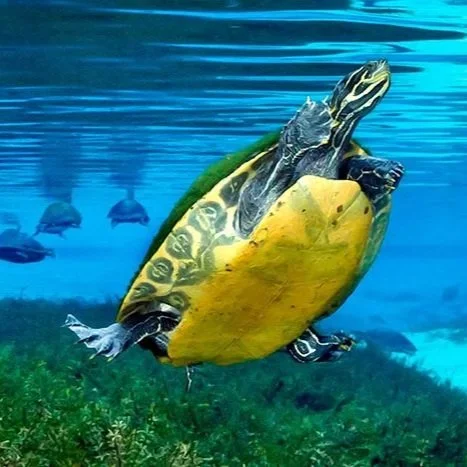
![Turtle swimming underwater in a clear spring with other turtles in the background]()
Introduction
PROBLEMS & SOLUTIONS
Florida’s springs depend on the choices we make about water, land, and stewardship. By understanding the problems they face and supporting practical solutions, we can help restore and protect the aquifer that sustains our communities and ecosystems. -
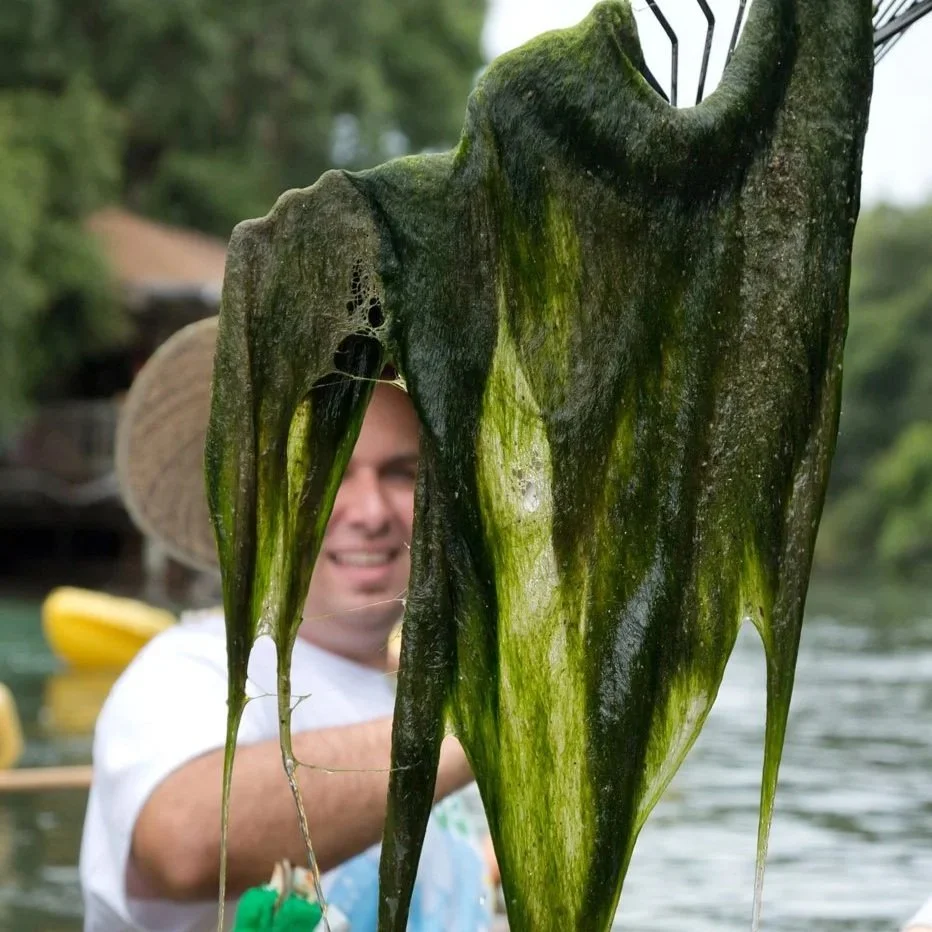
![A volunteer pulls thick green algae from a Florida spring during a river cleanup effort.]()
1-5: What You Can Do
VISIT, CONSERVE & SUPPORT
Protecting Florida’s springs begins with connection, conservation, and community action. By visiting these waters, reducing our impact, and supporting restoration efforts, each of us can help safeguard the aquifer that sustains life across the state. -
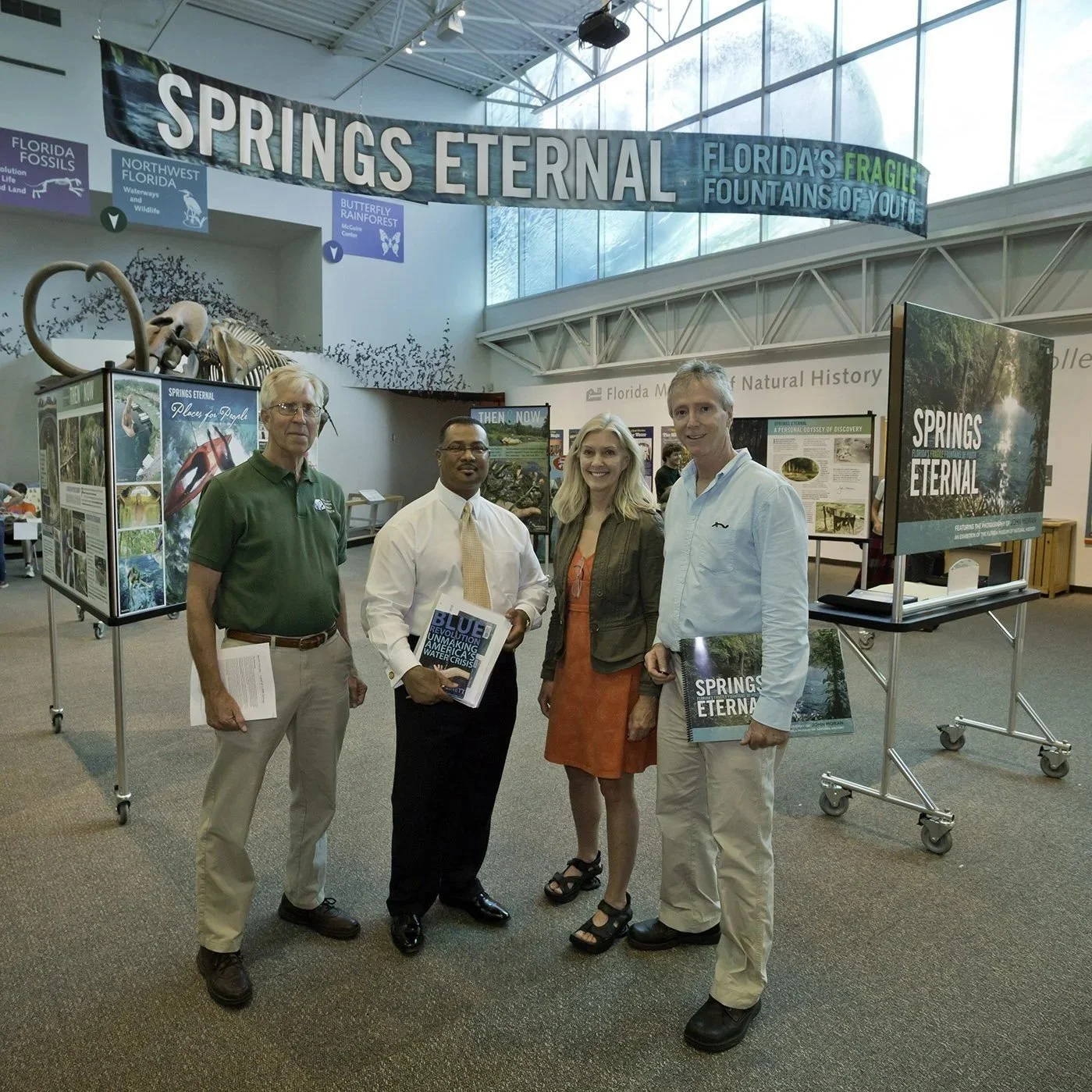
![Four people stand together inside the Florida Museum of Natural History beneath a large “Springs Eternal: Florida’s Fragile Fountains of Youth” exhibition banner, surrounded by display panels about Florida springs.]()
6: Be a Springs Citizen
RESPONSIBLE WATER USAGE
Become an informed springs citizen and advocate for responsible water planning, protection, and enforcement. Lasting solutions require public engagement, strong policy, and leadership committed to restoring Florida’s springs and aquifer. -
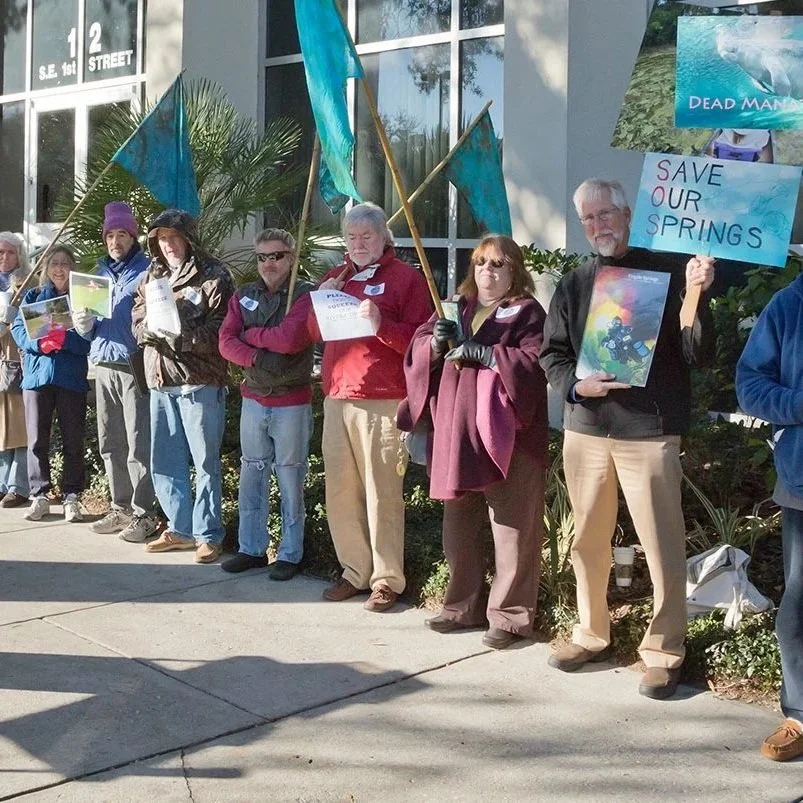
![A speaker addresses a group of environmental advocates gathered outside a building during a clean water rally, while participants hold signs and images supporting the protection of Florida’s springs.]()
7-12: Protect Our Waters
LEGAL ACTION, ETHICS & VISION
Protecting Florida’s springs requires informed citizens and active civic engagement. By staying informed, supporting legal and community efforts, voting, and cultivating a shared water ethic, we help protect the waters that sustain our communities. -
![Group of children and adults waving beside a bus from the H.O.P.E. Program in White Springs, Florida, promoting awareness of the Suwannee River and Floridan aquifer.]()
13: Create Your Own Project
COMMUNITY ENGAGEMENT
Create your own way of supporting and celebrating Florida’s springs through art, education, advocacy, or community action. By sharing your voice and creativity, you can educate and inspire others to care for and protect these remarkable waters.